

A new photograph that surfaced online on October 9, 2026 reportedly reveals for the first time with greater clarity a Russian FAB-500T aerial bomb equipped with a jet engine, highlighting the efforts of Moscow to extend the range of its guided munitions.
In the image, the bomb is visible mounted beneath a Su-34 fighter-bomber, with a small turbojet engine positioned at its rear and an air intake clearly visible.
According to military outlet SouthFront, this specific configuration is linked to the advanced guidance and range extension system UMPB-5R, which converts conventional aerial munitions into weapons capable of striking targets from significantly greater distances.
However, the photograph does not appear to show the fully assembled configuration of the system, as additional guidance and aerodynamic assistance equipment may be installed at a later stage.
Range up to 200 kilometers
The most important characteristic of the new system is its increased operational range.
Available estimates speak of a capability to engage targets at distances of 150 to 200 kilometers, thanks to the combination of a turbojet engine, improved aerodynamic design, and an upgraded guidance system.
Unlike conventional gravity bombs, which require the aircraft to draw closer to the target, the new configuration enables the munition to continue powered flight following release, utilizing additional engine thrust.
This offers a significant tactical advantage to Russian air forces.
The Su-34 could launch attacks from greater distances, reducing the necessity of approaching areas covered by Ukrainian air defense.
Nonetheless, the reported maximum range has not been independently verified through this specific photograph and may depend on release altitude and airspeed, as well as flight conditions.
First evidence emerged in 2025
Initial information regarding the development of the UMPB-5R became known in October 2025, when Ukrainian authorities reported the deployment of a new guided bomb with a jet engine.
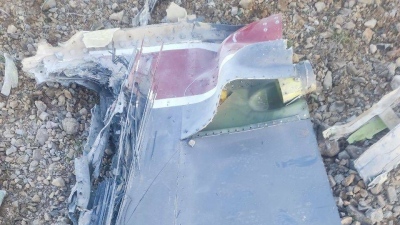
Photographs of munition wreckage recovered in Ukraine revealed engine components resembling the Swiwin SW800Pro-Y, a small commercial turbojet manufactured in China.
Images from that period were confined to fragments of the system and did not allow a complete reconstruction of the weapon's final configuration.
The new photograph provides a clearer view of how the engine may be mounted on the munition, without however confirming its final operational layout.
What changes in the Ukraine war
Russia has significantly ramped up the use of guided aerial bombs in the war in Ukraine, with Su-34 fighter-bombers playing a central role in strike missions against ground targets.
The addition of guidance kits and glide wings to conventional bombs has allowed Russian aviation to exploit existing stockpiles of munitions, while extending the standoff range from which attacks are launched.
The integration of a jet engine represents an additional evolutionary step in this technology, combining the destructive payload of an aerial bomb with extended flight range capabilities.
For Ukrainian air defense, this development may create supplementary difficulties, as Russian aircraft could potentially operate from safer standoffs while munitions cover a longer stretch of the trajectory to the target.
Concurrently, such a capability could broaden options for Russian aviation to conduct strikes against military installations and infrastructure in the Ukrainian rear.
It remains unclear, however, at what scale this specific version has entered operational service, and whether its real-world performance matches estimates of a range of up to 200 kilometers.
The emergence of the new photograph provides yet another indication that Moscow continues to refine its guided aerial weapons, pursuing greater standoff distance and reduced exposure of its aircraft to Ukrainian air defense systems.
www.bankingnews.gr












Σχόλια αναγνωστών